Triptychs

Double Exposure

3×3 Grid

16 My trait personality
I come across as a classic Defender type—someone who values stability, responsibility, and care for others. With my strong introversion, I likely prefer meaningful one-on-one connections over large social settings, and I recharge by having space to think and reflect. My observant nature suggests I’m grounded in reality, paying attention to details and practical needs rather than getting lost in abstract ideas. This combination makes me someone people can rely on—I notice what needs to be done and quietly step in to handle it.
My high feeling trait shows that my decisions are guided by empathy and personal values. I care deeply about the well-being of others and are often motivated by a desire to support, protect, and maintain harmony. At the same time, my strong judging preference means I like structure and organization. I probably feel most comfortable when there’s a plan in place, and I take pride in being dependable, prepared, and thorough. People likely see me as someone who follows through, keeps commitments, and creates a sense of order in both my own life and the lives of those around me.
Being assertive adds an extra layer of confidence to my personality. While I may be reserved, I’m not easily shaken—I trust my decisions and don’t second-guess myself excessively. This balance makes me a steady presence: calm under pressure.
Still life portraits with flash


Letter
Dear next year’s IB Photo students,
IB Photography is a rewarding course that blends creative expression with critical thinking and academic rigor. Students are expected to produce a consistent body of photographic work while exploring a wide range of techniques, themes, and influences. This includes learning camera functions, composition, lighting, and both digital and analog processes. Alongside shooting, students research artists and photographers, analyze visual styles, and connect their own work to broader artistic contexts.
A major component of IB Photo is the amount of writing involved. Students complete tasks such as the Comparative Study, where they analyze and compare the work of different photographers, and the Process Portfolio, which documents their creative journey. This writing requires clear explanations of artistic choices, influences, and technical decisions. Students must reflect on their experiments, successes, and failures, often using subject-specific vocabulary. Writing in IB Photo is not just descriptive—it is analytical and reflective, helping students justify their work and demonstrate a deeper understanding of photography as an art form.
Editing and post-production are also central to the course. Students spend significant time using software like Adobe Photoshop or Lightroom to enhance, manipulate, and refine their images. This can involve adjusting exposure, color grading, retouching, or experimenting with more conceptual edits. Beyond technical skills, editing is treated as part of the creative process, where decisions impact the final meaning of the image. Combined with deadlines, portfolio curation, and exhibition preparation, IB Photography requires strong time management and dedication, but it ultimately allows students to develop both artistic voice and professional-level skills.
Bottoms Up


Handwriting Shoot

Five new photos with captions
-

- Quiet moments, loud thoughts

-

- Waiting for the right moment

-

- Split, but rooted

-

- Growth leaves marks

-

- Nature, watches quietly

Light Painting


Studio Portraits or Still Lifes


Social and Political Issue Poster
Written Assignment: I feel that health care should be available to all because we all need to take care of our health. If we can’t be able to afford or even have health care how are we supposed to be able to take care of ourselves. Health care is very expensive to begin with, many can’t afford health care and just imagine the people who can’t get health care because they can’t afford it, think about the people who can’t even get health care. My argument is that health care should be available for all it should even be affordable for all. People shouldn’t have to worry about health care, it should be provided. Parent’s shouldn’t have to worry about taking their children to the doctor when their sick or injured because of the cost of medicine and the cost to visit the doctor. My “flip side” is to make people aware of how expensive health care is and to make health care available for all. The “other side” might say to get a better paying job but that just increases you cost for health care. I can see the other side’s” point, but health care should be available it doesn’t have to be free, but it should be affordable for all classes. My reasoning for choosing this stand is because many people are being affected by not being able to afford or even have health care. My artwork is to bring awareness to the situation.

Block Printing

Image recreation

Scavenger Hunt
-

- stickers

-

- stickers

-

- geometric shape

-

- warm tone colors

-

- purple color pencil

-

- something circular

-

- someone taking a picture

-

- something made of wood

-

- cool tone colors

-

- art supplies

-

- the word love

-

- food

-

- tools

-

- vein of a leaf

-

- camera


-

- rubber bands

-

- hands

-

- something shiny

-

- clouds

-

- side lighting

-

- something green

-

- an apple

-

- texture

-

- musical instrument

-

- someone wearing a hat

-

- mascara

-

- four legged animal

Surrealism

Art and Composition
-

- value
-

- thirds
-
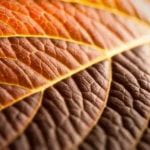
- texture
-
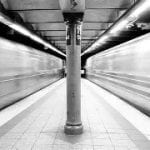
- space
-

- repeated pattern
-

- shape
-

- line
-

- leading line
-

- framing
-
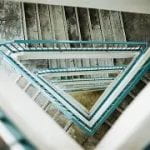
- form
-

- diagnols
-

- contrast
-

- colors
-

- balance
-

- Leading line
-

- Shape
-

- Value
-

- Contrast
-

- Texture
-

- Color
-

- Repeated patterns
-

- Balance
-

- Diagonals
-

- Line
-

- Rule of Thirds
-

- shape
Simulator
When I used the simulator, it gave me a good idea of how to use the camera, how to use the shutter speed, F-stop/aperture, and the ISO. When the camera is on manual mode, the shutter speed, aperture and ISO are all able to be manually changed. When the camera is on AV (Aperture Priority) mode the shutter speed cannot be changed however the ISO, and the aperture can be changed. When the camera is on TV (Shutter Priority) mode shutter speed and ISO are able to be changed but the aperture cannot be changed in TV mode. Shutter speed controls the lighting of the image. If the shutter speed is at a 1/125, 1/250, 1/500,1/1000 and 1/2000 the image with be dark, if the shutter speed is at 1/2, 1/4, 1/8, 1/15, 1/30 the image is bright. If the shutter speed is at 1/60 the image has great lighting. The aperture controls the lighting if the aperture is at f/11, f/16, f/22, f/32 and f/64 the lighting of the picture will come out darker. If the aperture is at f/1.4, f/2, v/2.8, f/4.0 and f/5.6 the lighting of the picture will become really bright. F/8 is the best setting for aperture because the lighting is just right. The ISO controls how pixely the image comes out to be such as the ISO being 50, 100, 200 and 400 and if the ISO is at 800, 1600, 3200 the image is very bright.
Read and Write Questions and Answers
- What are aperture, shutter speed and ISO? Aperture is the opening of the camera lens, shutter speed is the length of time the camera’s shutter speed is open, ISO measures the sensitivity of the image sensor to the light.
- When would you need to change your ISO? The ISO should be changed when the lighting conditions change such as bright outdoor setting and the sensitivity to the light.
- What is aperture and shutter priority settings? The camera automatically adjusts the shutter speed to achieve the correct or proper exposure.
- What are AF modes how do you change them? Modes that control how the camera focuses on a subject. Some AF modes are, single point-AF, continuous AF, and auto AF.
- Why do your need to meter the light to get the right exposure? The meter is needed to get the right exposure to determine the aperture, shutter speed and ISO.
- What is the difference between a normal, wide angle and telephoto lens? Normal lens has a focal length around (50mm), wide-angle lens has a focal length (16-35mm).
- What is white balance and why would you need to change it? The process of adjusting the colors to an image to appear natural.
- What is depth of field and what is the difference between shallow and good? Ranges as a distance within the photo, shallow is only a small portion of the image in focus, large image is in focus and usually is landscapes.
- What are drive modes and metering modes? Drive modes control how many shots the camera takes when pressing the shutter button. Metering modes determine the correct exposure.
- What is exposure compensation? Exposure compensation allows the person to manually adjust the exposure.